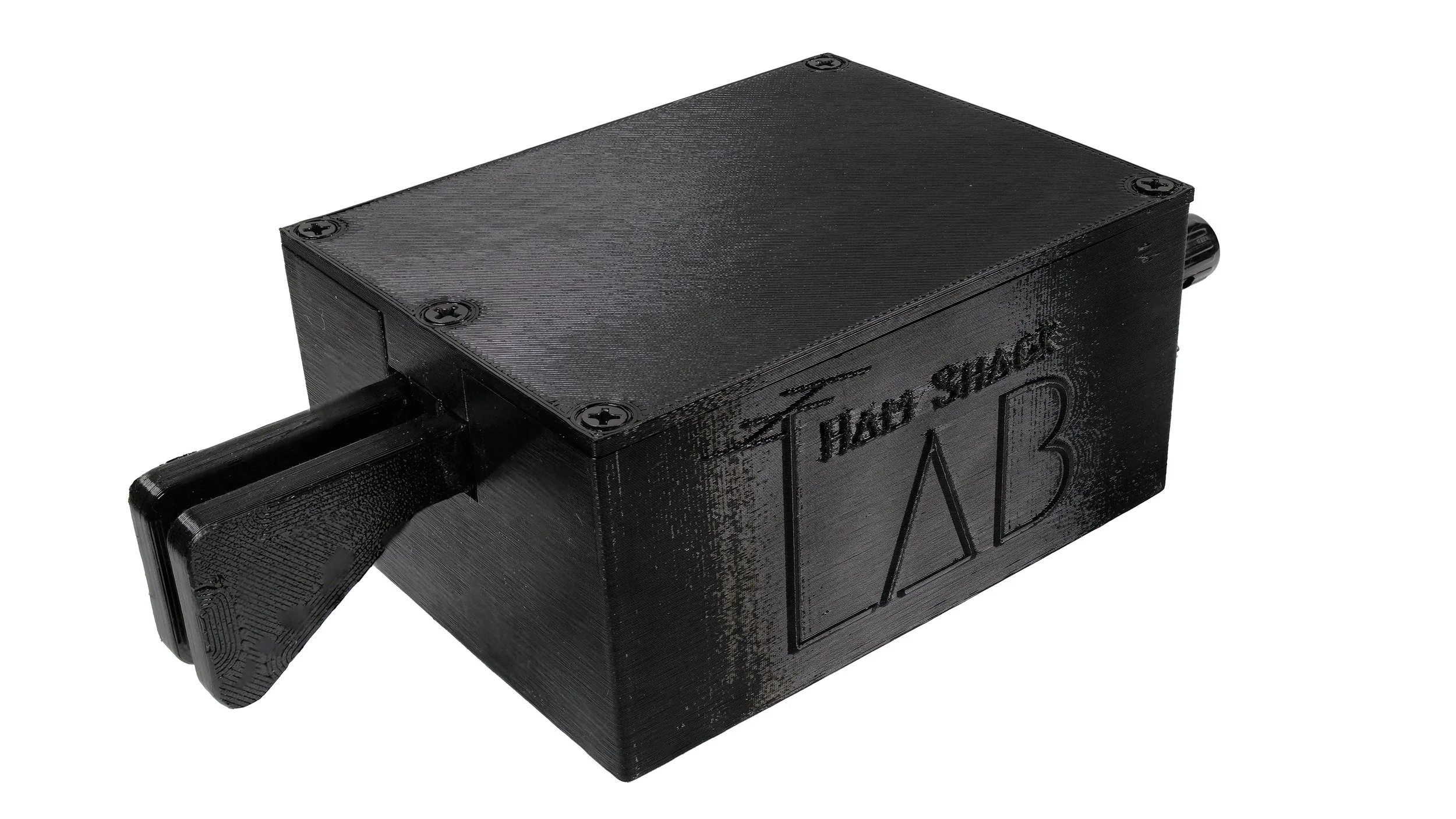
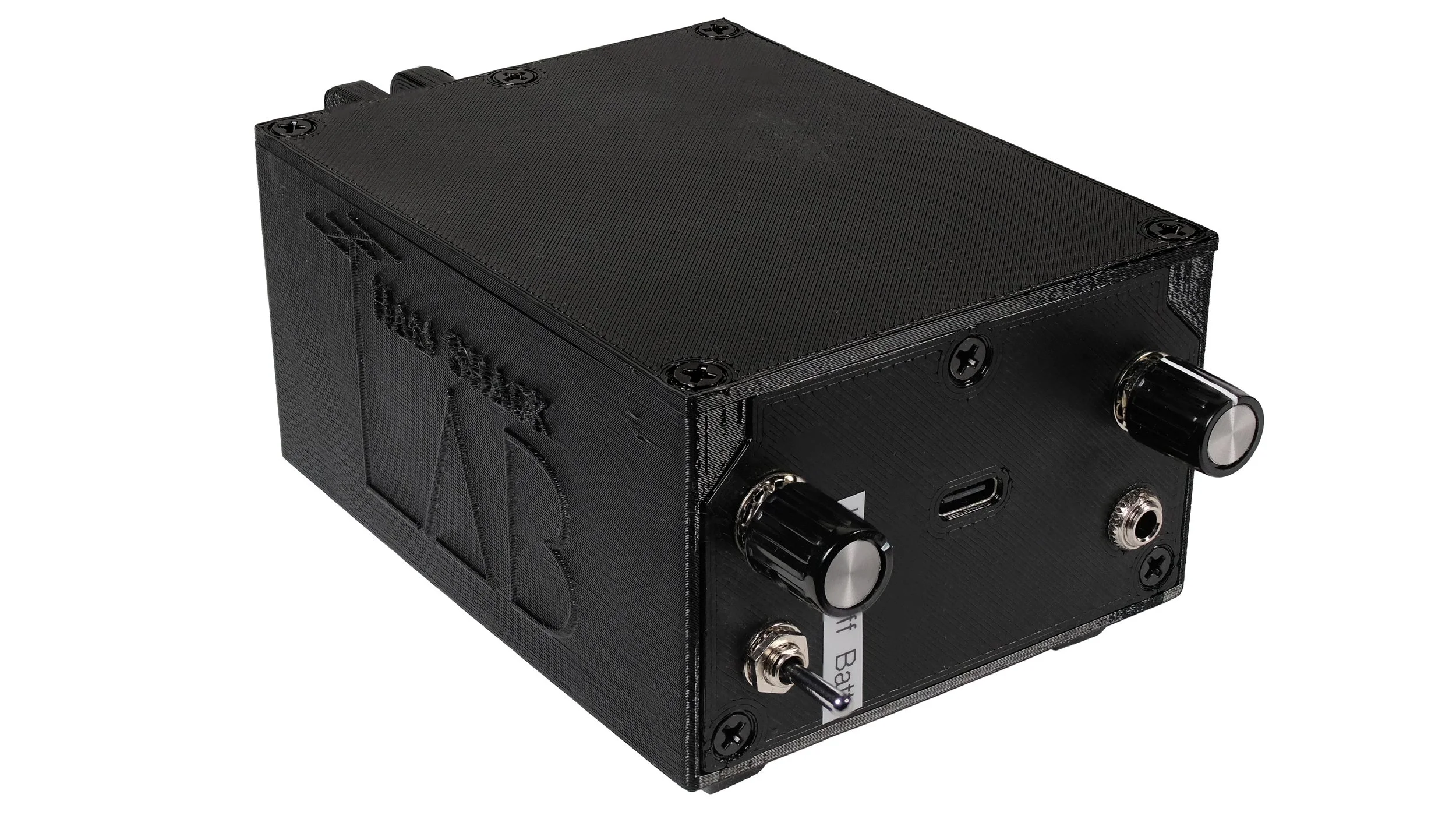
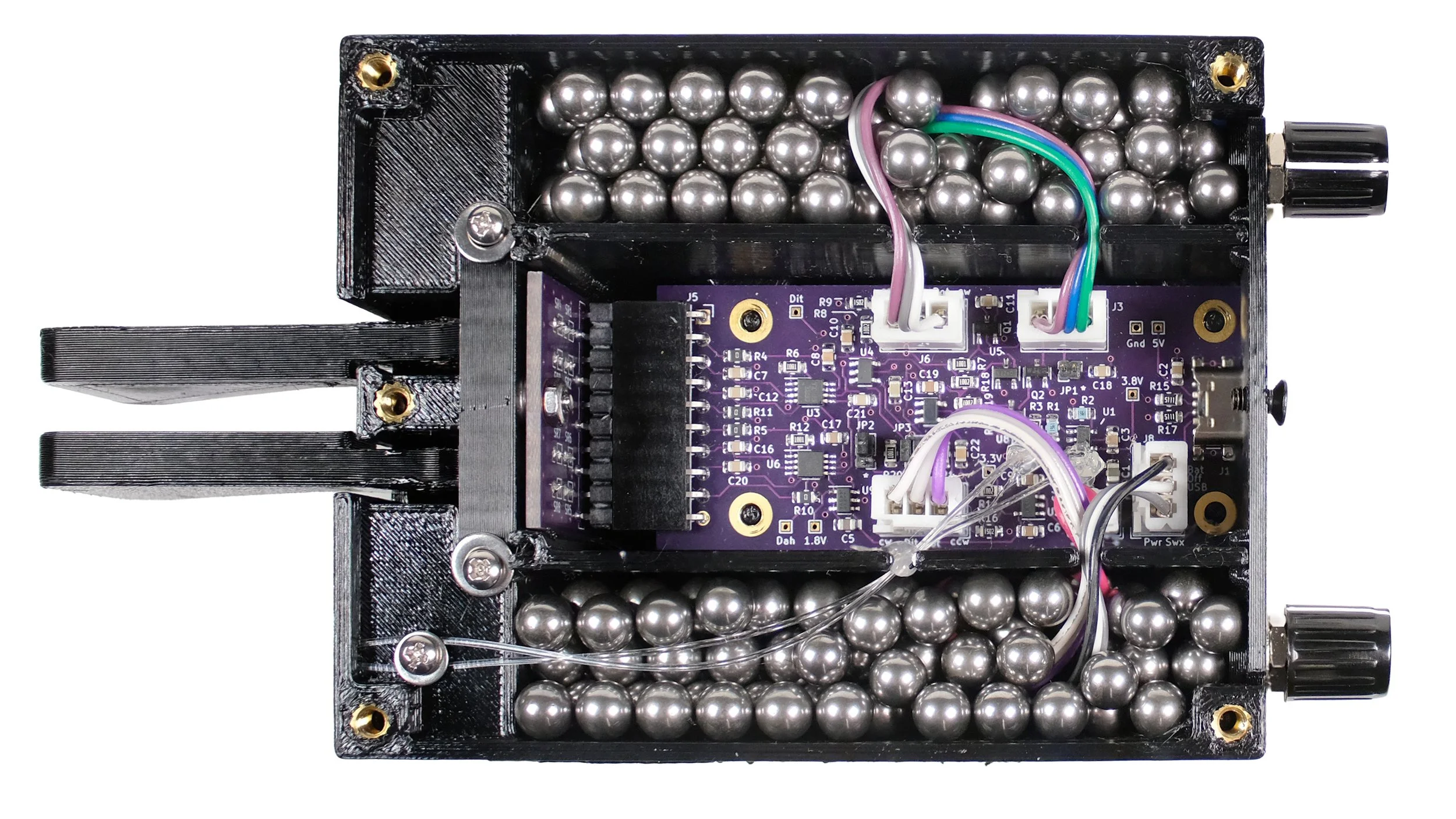
The Cent paddle will be available soon. We plan to offer fully built units, kits for self-assembly, and all the design files to build or modify them yourself.
We are working with our friends at Crowd Supply to handle the manufacturing and shipping. Please express your interest on Crowd Supply by subscribing here. We are only able to make them available if we get enough subscribers.
We appreciate your interest in our product!
Cent Paddle is a high-performance paddle with a fantastic feel for sending Morse Code (we amateur radio operators call it CW). It is not another touch paddle; the paddles need to be pressed. Cent Paddle behaves and feels like a traditional mechanical paddle but without the delicate, hard to adjust, fiddly contacts, springs, bearings, and tiny moving parts.
We named it Cent Paddle because it is sensitive enough to easily detect the weight of a penny. It can be adjusted in seconds (with no tools), is tough enough to toss into a backpack for a field outing (no padded box needed), never needs to have the contacts cleaned (there are no contacts), and is completely immune from dust. All in all, it’s a fantastic alternative to a fragile, fussy mechanical paddle. There are plenty of things to worry about when operating an amateur radio station, but your paddle shouldn’t be one of them.
Tap Out Dits in a Dash
The Cent Paddle is for sending Morse code (CW). It is meant to be used alongside a keyer, either an external keyer (like a WinKeyer), or the keyer built into most amateur radios.
The Cent Paddle is equally at home in the field or in your ham shack.
The inspiration for Cent Paddle came about in the middle of a CW contact between my location in Tucson, Arizona and an expedition on a little island off the coast of Africa. Right when the other operator called me back, my paddle decided to quit sending dits. By the time I had temporarily solved the issue, the other operator had moved on and I was unable to re-establish contact. This made me realize that mechanical contacts are an outdated solution.
Cent Paddle senses the microscopic bend of the paddle arm and uses this instead of a contact to detect each press. Since it relies on strain gauges, there are no moving parts, no contacts, and no need for delicate springs, adjustment screws, precise bearings, or expensive mechanisms. It also only requires the lightest touch, making it very comfortable and fast to use.
Strain gauges are tough and reliable. Strain gauges are used in truck scales, crane scales, loading docks, and in all sorts of dirty industrial settings yet are extremely sensitive. Strain gauges can be covered in water, dust, grease, or dirt with no effect on their performance! Cent Paddle feels like a mechanical paddle, but with no moving parts (other than the tiny bend in the arms). The battery lasts for days of continuous use, or the paddle can be powered with a standard USB Type-C cable, which also charges the battery.
Power requirements: 5 V USB Type-C
up to 2.6W charging (0.52 A)
0.1 W when not charging (20 mA)
Battery: 3.7 V, 2.2 Ah, Li-Polymer rechargeable with USB Type-C
Li-Polymer charge management controller built-in with temperature, current, and voltage protection
Charge time (for fully depleted battery) approximately 5 hours
Charge status LEDs
Battery life: more than 48 hours of use (between charges)
Response time: fast enough to send > 100 wpm (theoretical; the oscilloscope says it is possible)
Keyer interface: 3.5 mm stereo phone jack
Weight: empty (paddle only), 165 g
(paddle with battery): 210 g
(paddle, battery, and supplied weights installed): 665 g
Dimensions (WHD): 7.6 X 5.5 X 14 cm (3.0 X 2.2 X 5.5 in)